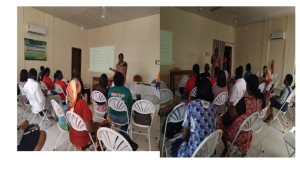
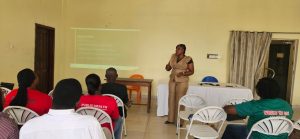
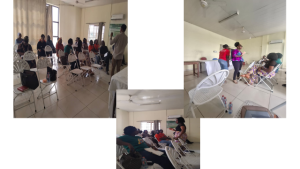
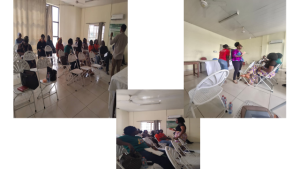
Madina, June 10, 2026 – The La Nkwantanang-Madina Municipal Health Directorate, in collaboration with the La Nkwantanang-Madina Municipal Assembly, has organised an orientation and refresher training programme for health personnel and key stakeholders aimed at strengthening healthcare delivery and improving health outcomes within the municipality.
The training, held on Wednesday, June 10, 2026, brought together participants from the municipality’s five sub-district health facilities, namely Pantang Hospital, Pentecost Hospital, Danfa Health Centre, Kekele Polyclinic and Madina Polyclinic. Beneficiaries included midwives, community health nurses, laboratory technicians, District Health Committee members, HIV/AIDS Committee members, TB service providers, the Municipal TB Coordinator, Assembly Members and members of the Municipal Response Team.
The programme focused on enhancing participants’ knowledge and skills in the implementation of the Free Primary Health Care (FPHC) Initiative, tuberculosis (TB) sample collection procedures and Early Infant Diagnosis (EID) services for HIV-exposed infants.
Delivering the first presentation, the Municipal Health Promotion Officer and HIV Coordinator, Miss Vida Wewupadi Agoriwo, introduced participants to the Free Primary Health Care Initiative. She explained that the initiative seeks to ensure equitable access to essential healthcare services, including maternal and child healthcare, routine immunisation, HIV and TB services, malaria treatment and other primary healthcare interventions.
Miss Agoriwo further disclosed that a solar-powered Free Primary Health Care facility located at Social Welfare now operates round the clock, providing uninterrupted healthcare services to residents and contributing to improved access to quality healthcare.
The second session was facilitated by Mr. Julius Nutor, a Laboratory Scientist who provided practical guidance on tuberculosis sample collection and handling. He underscored the need for healthcare workers to adhere strictly to standard operating procedures to ensure accurate diagnosis and effective treatment of TB cases.
Mr. Nutor noted that stool samples are the preferred specimens for diagnosing TB in children, while sputum samples remain the standard for adults. He urged participants to maintain sample integrity through proper collection, storage and transportation procedures.
The final presentation was delivered by Miss Lawrencia Ewoenam Kadogbe, who focused on Early Infant Diagnosis (EID) for HIV-exposed infants. She highlighted recommended testing timelines, prophylaxis protocols and the critical role of early diagnosis and treatment in improving survival outcomes among affected infants.
During the interactive sessions, participants shared experiences, best practices and challenges encountered in service delivery. Discussions centred on the importance of effective collaboration among stakeholders, clear communication channels and strict adherence to established healthcare guidelines.
The training programme concluded with a renewed commitment from participants to strengthen healthcare services across the municipality. Stakeholders pledged to work collaboratively to improve access to quality healthcare and contribute to better health outcomes for residents of the La Nkwantanang-Madina Municipality