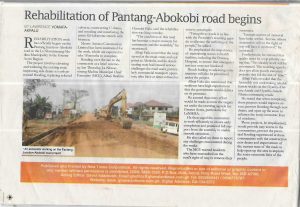
Rehabilitation works have officially commenced on the Pantang Junction–Abokobi road within the jurisdiction of the La Nkwantanang-Madina Municipal Assembly (LaNMMA) in the Greater Accra Region.
The project involves the elevation and widening of the existing road, improvement of side drains to curb perennial flooding, replacement of selected culverts, construction of U-drains, and the resealing and resurfacing of the entire 8.6-kilometre stretch with bitumen.
The project contractor, Awerco Construction Limited, has been engaged to execute the works, which are expected to be completed within 18 months.
Speaking on the development, the Municipal Chief Executive of the La Nkwantanang-Madina Municipal Assembly, Hon. Ibrahim Faila Fusseini, noted that the rehabilitation of the road was long overdue due to its deteriorating condition and the challenges it posed to commuters and residents.
According to him, the road serves as a major entry and exit route to Abokobi and its poor condition had created significant difficulties for road users, particularly commercial transport operators.
Hon. Faila further emphasized that the rehabilitation works align with government’s broader infrastructure development agenda aimed at improving road networks, easing transportation challenges, and enhancing access to key services within communities.
He also stressed the importance of maintaining access to health facilities, including the Pantang Hospital, to ensure that emergency services and healthcare delivery are not disrupted during the construction period.
The Municipal Chief Executive assured residents that the Assembly would provide the necessary support to the contractor to ensure the smooth execution of the project and timely completion of the works.
He further urged residents and property owners who may have encroached on the road’s right of way to cooperate with authorities and comply with notices served to remove unauthorized structures to allow the project to proceed without obstruction.
Upon completion, the project is expected to improve accessibility, prevent flooding through improved drainage systems, and contribute to the socio-economic development of communities along the corridor.
Credit: Lawrence Womafo Akpalu
@